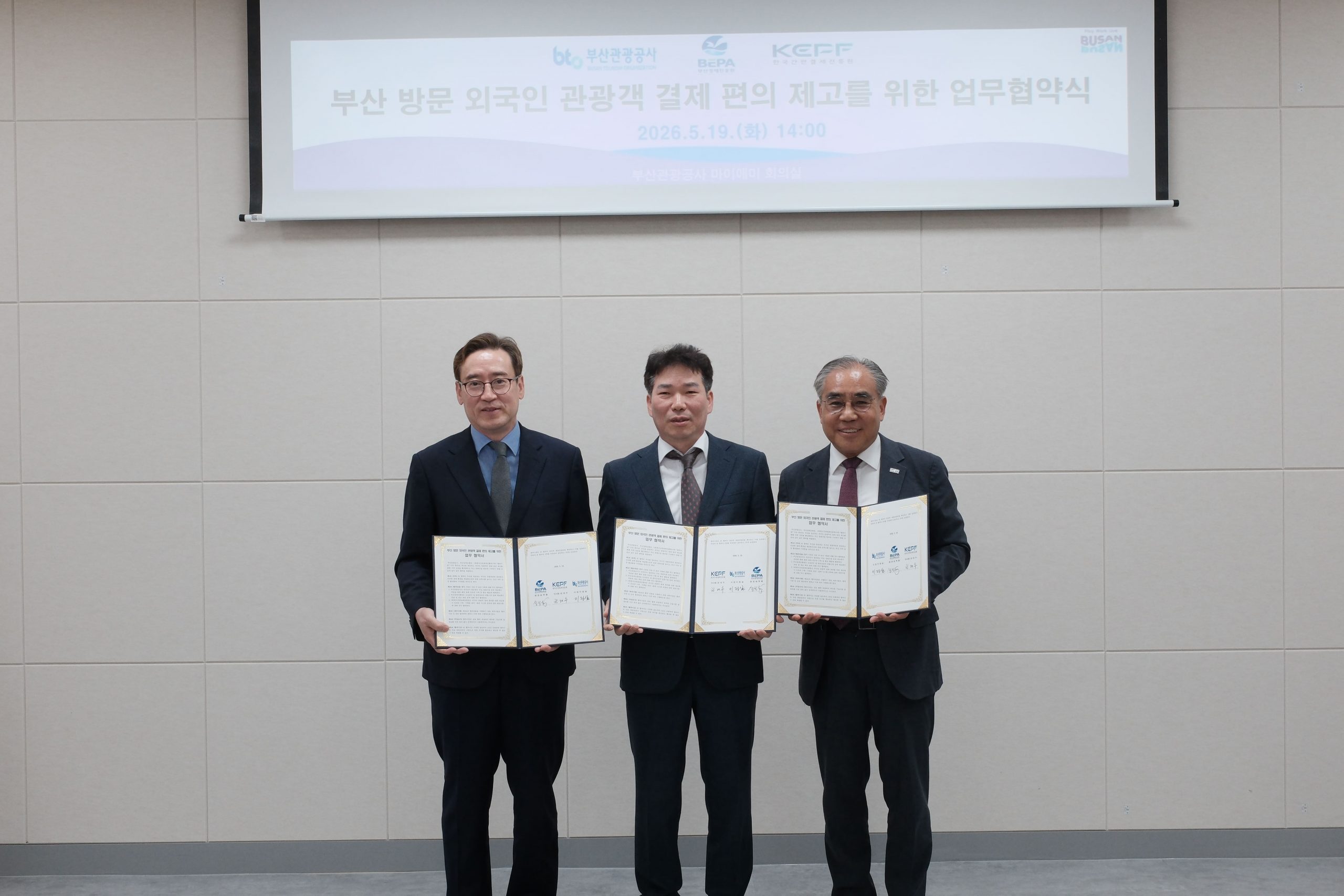
The Korea Easy Payment Agency (KEPA) has partnered with the Busan Tourism Organization and the Busan Economic Promotion Agency to significantly improve payment convenience for foreign visitors in Busan. This memorandum of understanding (MOU) aims to expand Zero Pay infrastructure and foster a global payment ecosystem, benefiting tourists with seamless transactions and providing local small businesses and traditional markets with new opportunities for economic growth.
Busan Enhances Payment Systems for International Visitors
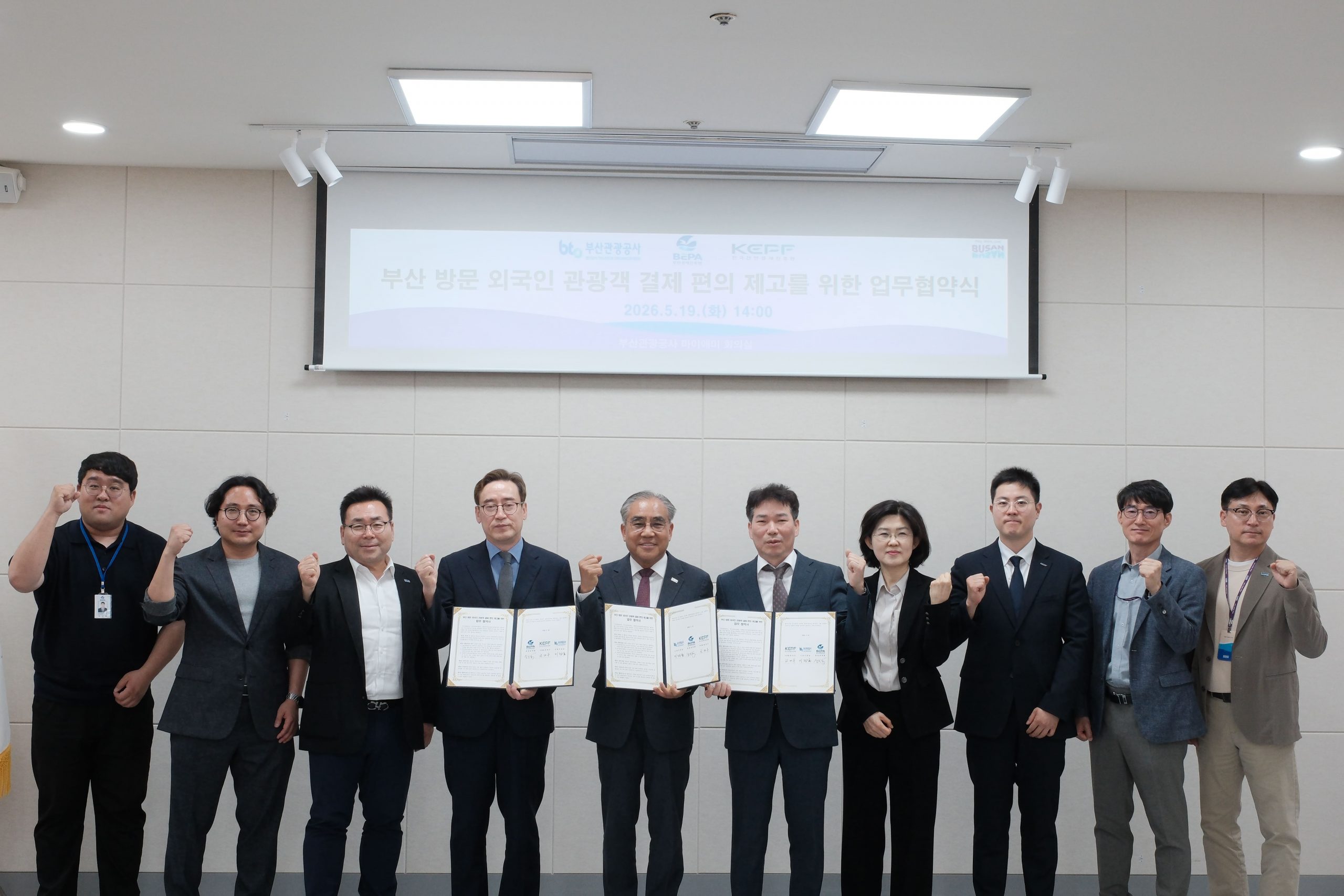
The Korea Easy Payment Agency (Chairman Kwon Dae-soo, hereafter KEPA), the Busan Tourism Organization (President Lee Jeong-sil), and the Busan Economic Promotion Agency (President Song Bok-cheol) signed a memorandum of understanding (MOU) on May 19 to significantly improve payment convenience for foreign tourists visiting Busan. The core objective of this agreement is to establish a global payment environment that makes transactions easier for international visitors, thereby increasing tourism revenue for local small businesses and traditional commercial districts.
Busan is rapidly emerging as a prominent international tourist hub, successfully attracting a growing number of foreign visitors. Last year, the city welcomed a record 3.64 million international tourists, and the first quarter of this year alone saw over 1 million arrivals, underscoring a remarkable increase. Notably, contemporary foreign tourists visiting Korea are increasingly opting for independent travel over traditional group tours, focusing on exploring local shops and engaging in diverse experiential activities. This trend has created a surging demand for global payment infrastructure not only in major tourist areas but also within the smaller, local commercial districts. Addressing this need to enhance the competitiveness of local economies has become an urgent priority.
Zero Pay Empowers Smart Spending for International Travelers
Zero Pay already boasts robust integration with global payment systems, offering substantial convenience to international travelers. It is linked with 71 payment apps across 21 countries, including China, Japan, and Taiwan, allowing foreign visitors to easily make payments at Zero Pay-affiliated stores in Korea using their familiar home-country apps. This system eliminates language barriers and the hassle of currency exchange, enabling smartphone-based transactions and significantly enhancing tourist satisfaction.
This extensive global network of Zero Pay has also positively influenced the attraction of visitors to Korea. Out of 18.94 million total tourists who visited Korea last year, approximately 77%, or 14.53 million, originated from countries where Zero Pay is integrated, indicating a vast potential user base. Furthermore, with 97% of all Zero Pay merchants being small businesses, increased usage by foreign tourists is expected to directly boost sales in traditional markets and local commercial districts, making a tangible contribution to local economic revitalization.
Elevating Busan's Global Tourism Status and Fostering Shared Economic Growth
Through this agreement, the three organizations plan to further expand the Zero Pay infrastructure, particularly focusing on Busan’s key tourist destinations and vibrant local commercial areas. They will establish Zero Pay usage environments in frequently visited tourist spots and actively implement diverse promotional activities to encourage overseas payments. These efforts are crucial for improving payment convenience, stimulating tourist spending, and further elevating Busan’s appeal as a travel destination.
Kwon Dae-soo, Chairman of KEPA, emphasized the significance of the agreement, stating, "We will actively contribute to enhancing Busan's status as a global tourist city by improving payment convenience for foreign visitors." He further expressed his commitment, adding, "We will strive to ensure that all small business owners in Busan benefit from tourism revenue, promoting not only the attraction of foreign tourists but also the balanced development and shared growth of the local economy."